Client
- Northeast and Yilan Coast National Scenic Area NEYCNSA
Taiwan Tourism Bureau - Taiwan
2026
Project
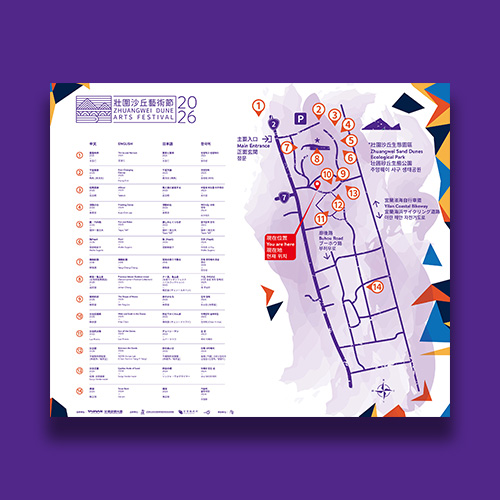
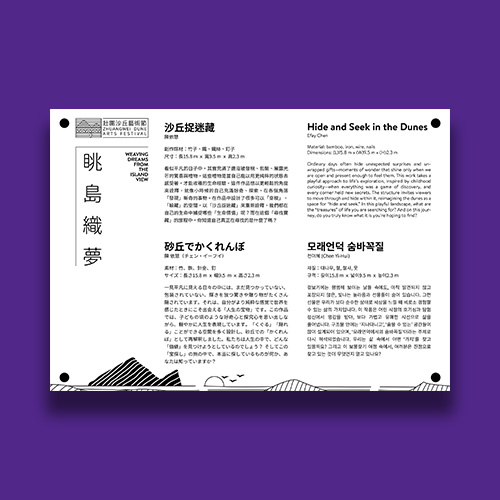
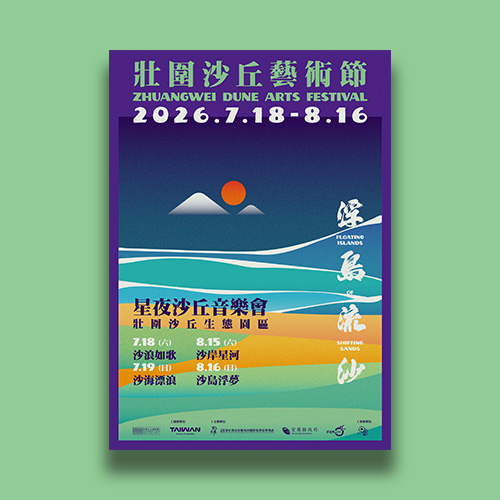
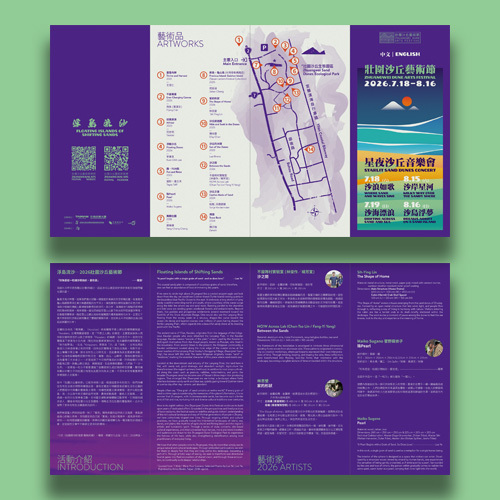
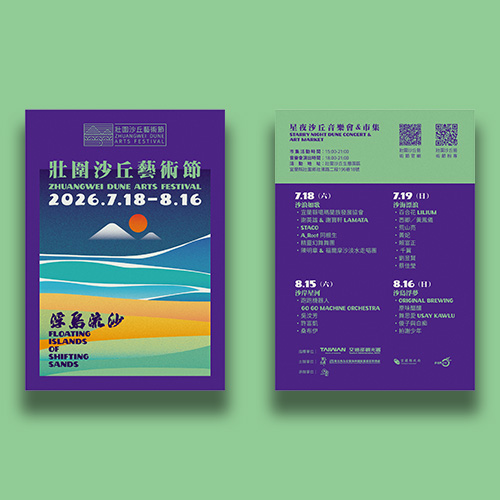
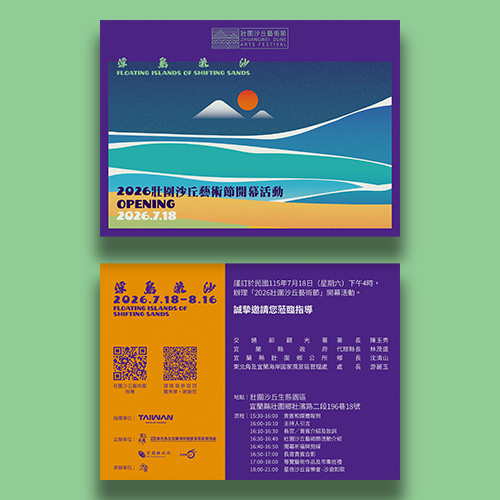
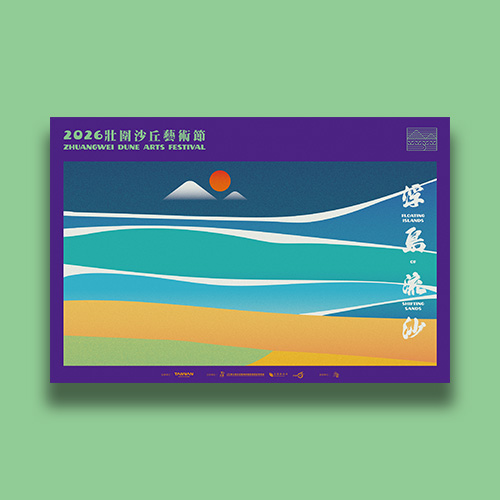
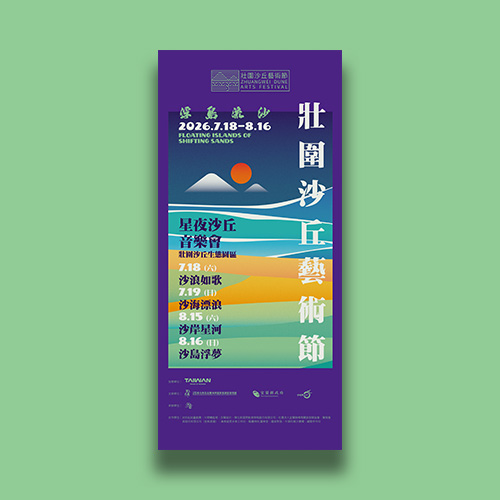
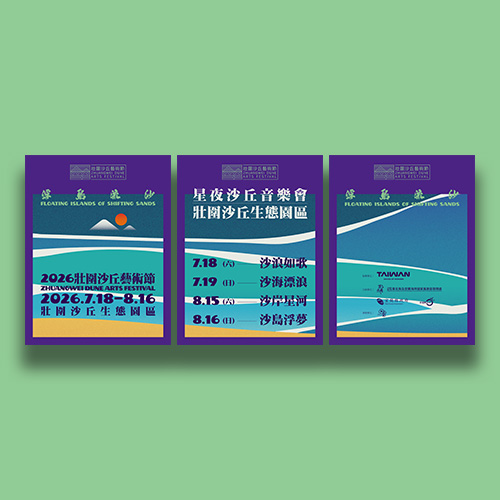
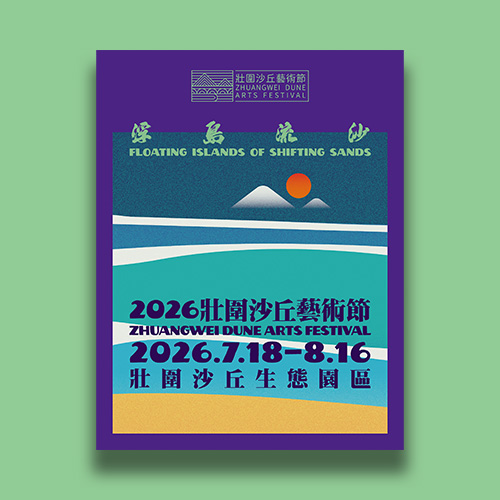
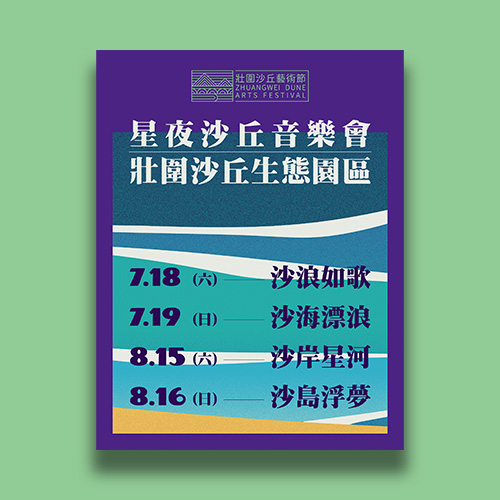
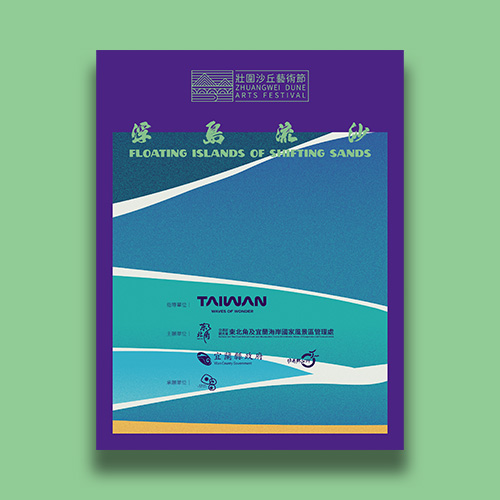
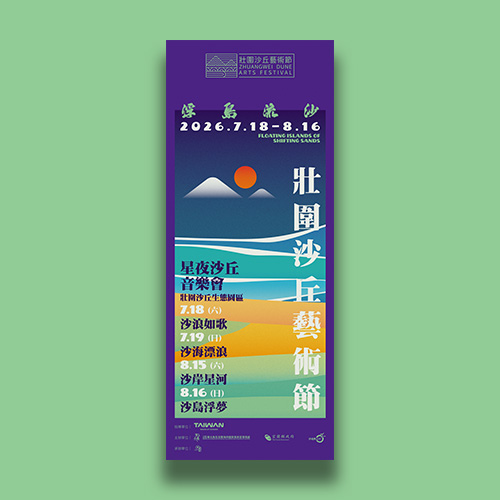
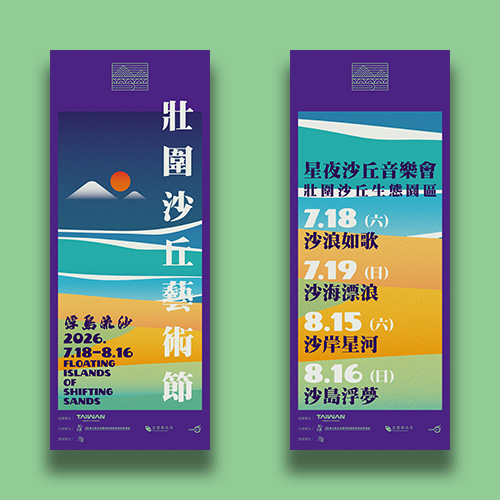
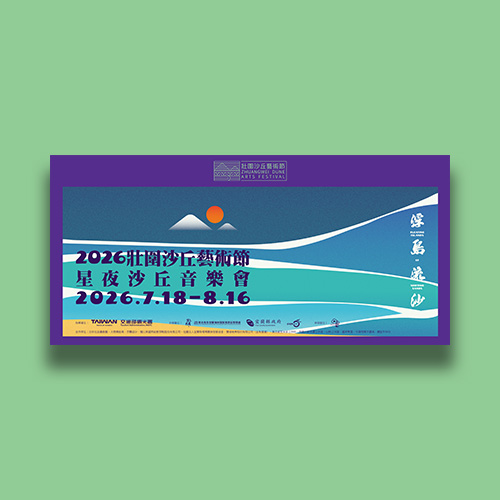
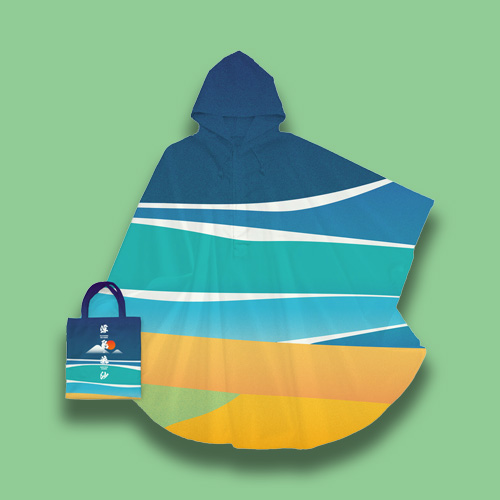
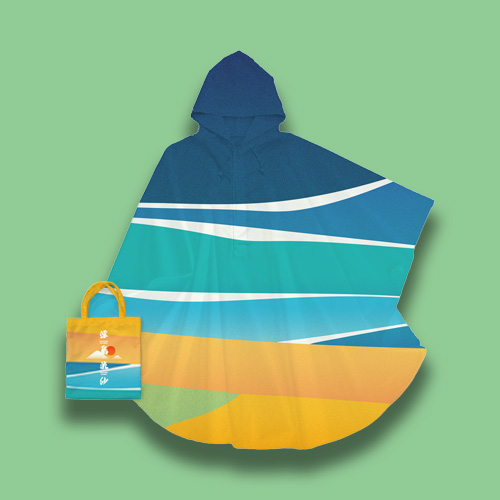
Visual identity for 2026 Zhuangwei Dune Arts Festival. Visual image included various designs: logo, festival colors, fonts, festival brochure, mask design, web design, etc. This year’s main colors were chosen: purple, green and natual white. Other sub colors are different shades of blue and yellow. These colors represent the landscape of Zhuangwei (land, sea and sky). The colors work as a harmonious whole, like land, sea and sky. Color variations represent the cultural and human diversity of Zhuangwei and Yilan region while bringing everyone together during the festival. The colors are taken from the features of the local area and landscape: mountains, paddy fields, and sand dunes. Abstract pattern represents sand dunes that continuously change their shapes.
The theme of the 2026 Zhuangwei Life Festival is “Floating Islands of Shifting Sands”
In the words of the festival curator Yun-Yi Lee:
“A pearl begins with a single grain of sand—and so does love.”
— Luo Ye
This coastal sandy plain is composed of countless grains of sand; therefore, one can feel an abundance of love shimmering like pearls.
If we were to circle high above Zhuangwei like a crested serpent eagle and look down from the sky, we would see Guishan Island (Turtle Island) resting quietly in the boundless blue Pacific Ocean to the east. It embraces a long stretch of grey sandy coastline extending north and south, where countless white waves surge along the tidal line where sea and sand meet. Running parallel to the shoreline and tidal zone are winding green windbreak forests and embankments. Beyond them, rice paddies and prosperous settlements extend westward toward the foothills of the Snow Mountain Range. One would also see the Lanyang River flowing from the snowy peaks in a sinuous, dragon-like curve toward the ocean—its dense and layered courses over millions of years having shaped the fertile Lanyang Plain, which expands into a beautiful sandy shore at its meeting point with the Pacific.
The ancient name of Yilan, Kavalan, originates from the language of the Indigenous Kavalan people who once inhabited the Lanyang Plain. In the Kavalan language, Kavalan means “people of the plain,” a term used by the Kavalan to distinguish themselves from the Atayal people, known as Pusulan, who lived in the mountains. From ancient times to the present, the Kirippoan community, a Kavalan settlement located along the inner edge of the coastal dunes at the lower reaches of the Lanyang River (today’s Donggang Village, Zhuangwei Township), has never left this land. The name Kirippoan originally means “sand” or “seashore,” marking the essential character of this place where sand meets sea.
Located at the downstream and estuary of the Lanyang River, the land here is flat, with sandy soil, good drainage, and abundant sunlight. Agriculture has therefore been the region’s primary livelihood. In addition to root crops cultivated along the coast—such as peanuts, radishes, watermelons, and yams—the broader Zhuangwei area has become one of Taiwan’s three major rice-producing regions. Thus emerged the Zhuangwei we see today: a landscape where fields interlace between sandy earth and blue sea, quietly gazing toward Guishan Island at sunrise day after day—serene, yet abundant.
People often say, “One grain of sand contains an entire world.” If every grain of sand is a time capsule condensing the memories of the planet’s formation, it is no wonder that Zhuangwei, with its immeasurable sands, has become such a fertile land of fish and rice, nurturing rich and diverse cultural traditions over centuries.
From the Zhuangwei Dune Landscape Art Festival to the Zhuangwei Dune Arts Festival, eight years have now passed. Through sustained effort, we have continually sought to redefine and guide how visitors understand Zhuangwei—starting from the perspectives and lived practices of local residents, and revealing the layered richness of a place shaped by generations. Through ongoing artistic and cultural practices, we have gradually traced the intertwined landscapes of island, sea, dunes, and plains; the rhythms of agricultural and fishing labor; and the region’s artistic and humanistic spirit. Through a series of dune concerts, site-based cultural experiences, and interconnected local venues, more and more travelers and audiences are drawn to the Zhuangwei Dune Ecological Park to experience the fullness of life here, while also strengthening identification among local practitioners of everyday living.
We hope that when people come to Zhuangwei, they do more than simply see its unique natural and cultural landscapes. Through embodied participation, we wish for them to deeply feel that they are truly within this landscape—becoming a part of it. Through artistic ways of seeing, we seek to transform one-directional tourist gazes into fluid encounters of shared vision, and through these encounters, to continually build deeper relationships.
 Lumidesign
 Lumidesign