Client
- Northeast and Yilan Coast National Scenic Area NEYCNSA
Taiwan Tourism Bureau - Taiwan
2025
Project
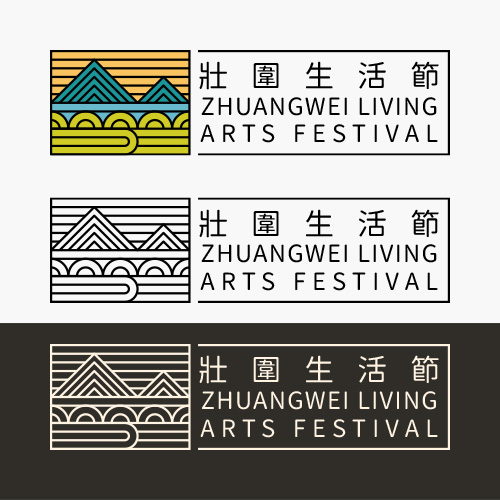
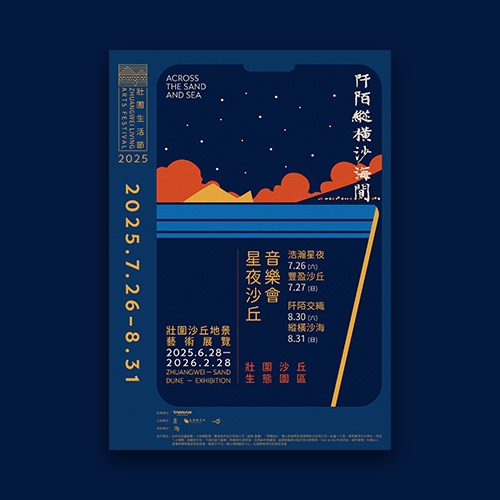
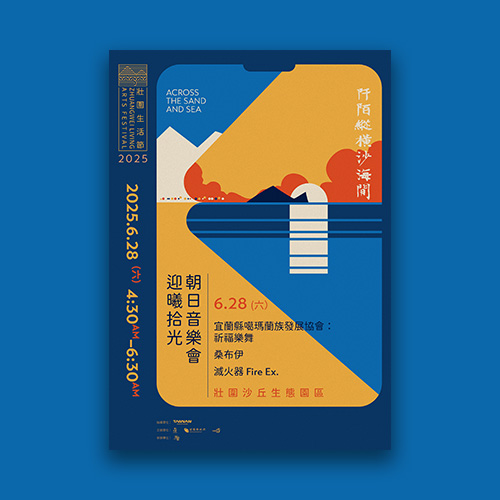
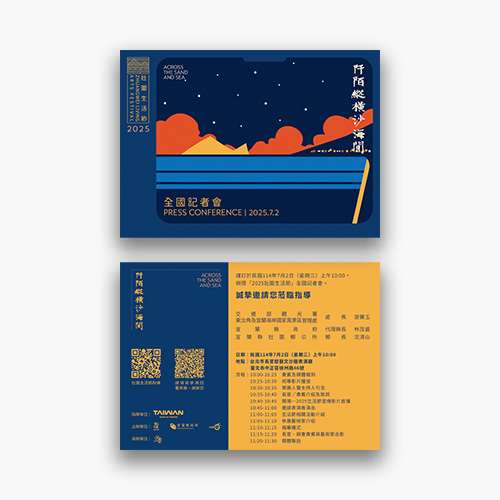
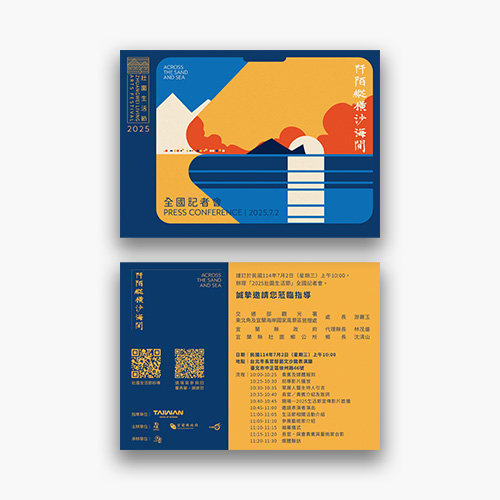
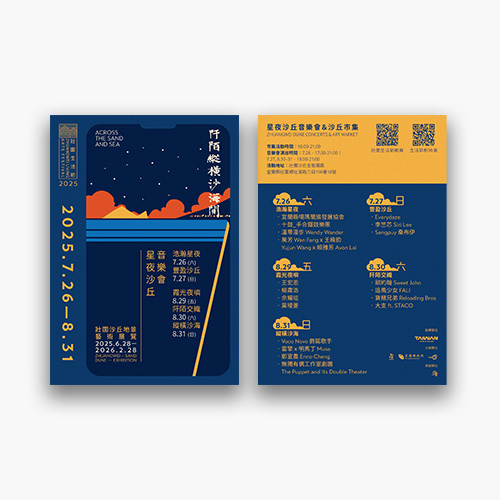
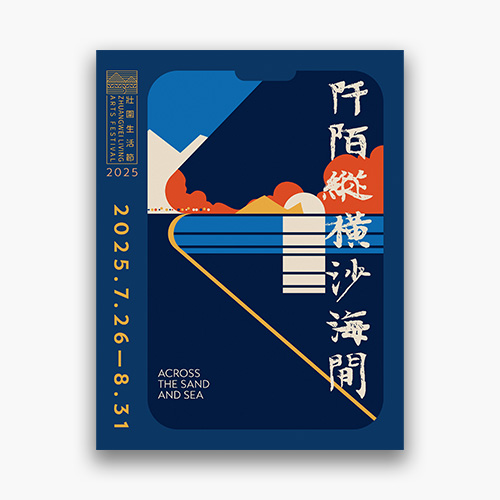
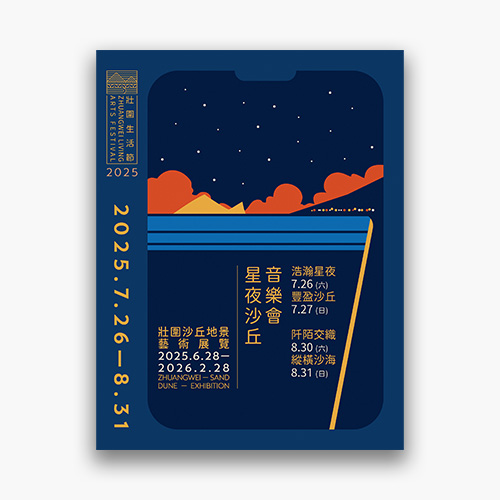
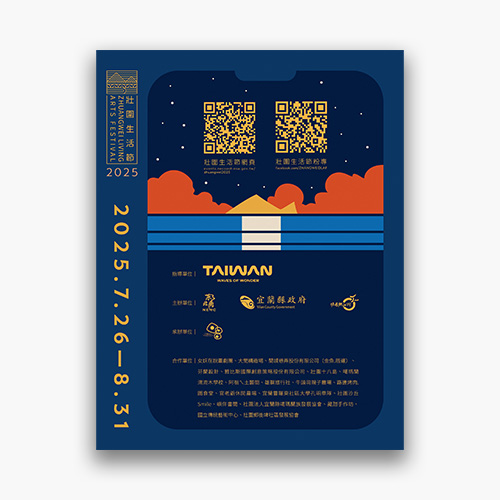
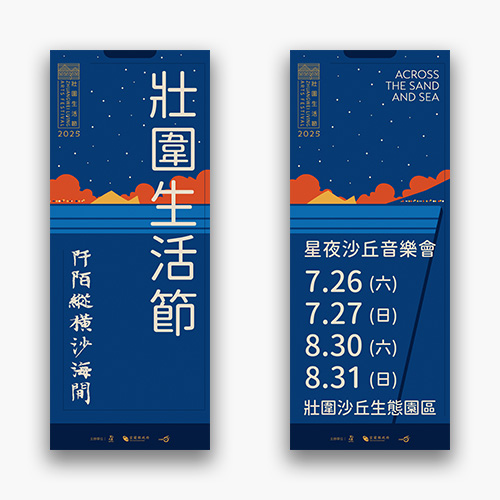
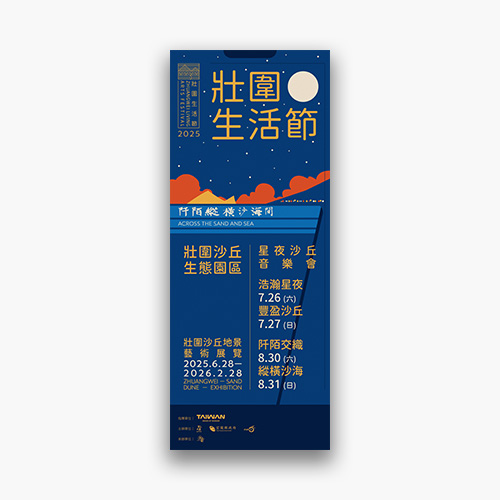
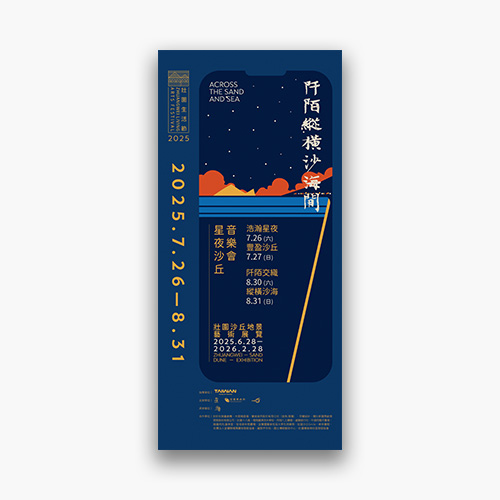
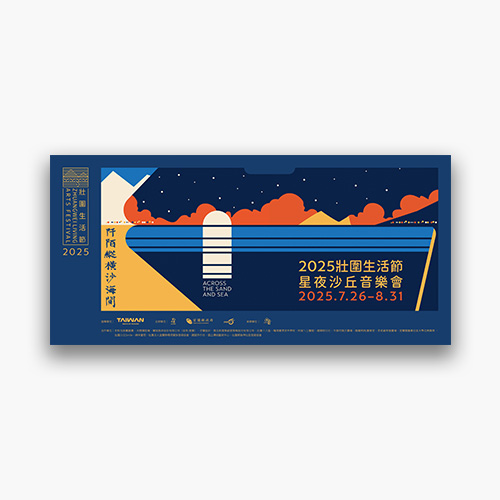
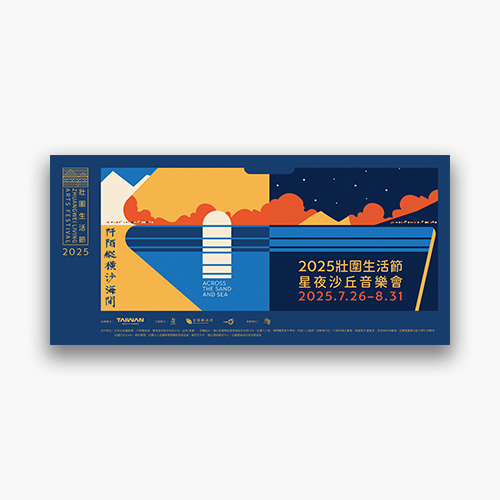
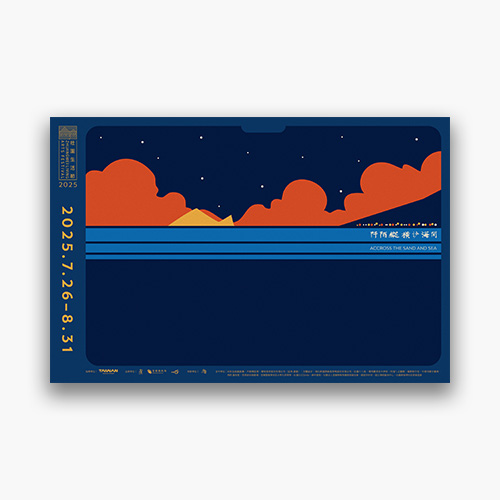
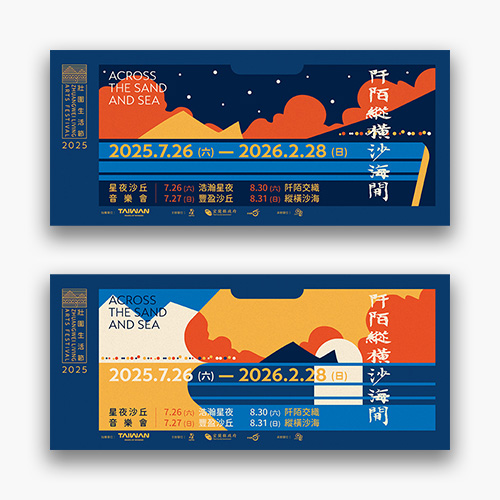
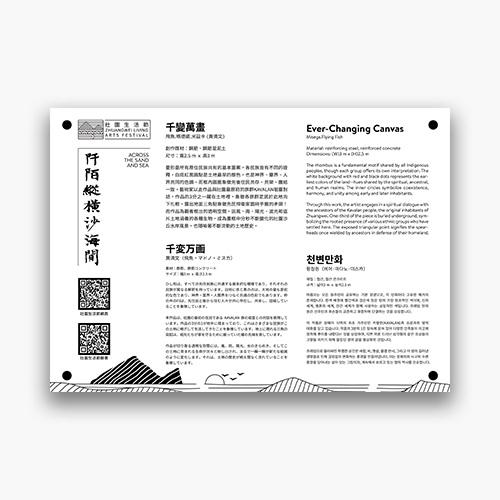
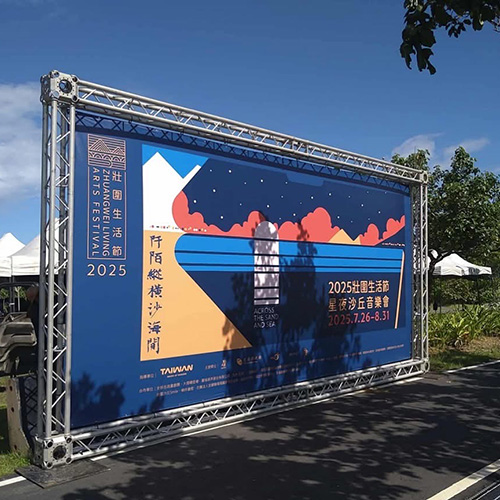
Visual identity for 2025 Zhuangwei Living Arts Festival. Visual image included various designs: logo, festival colors, fonts, festival brochure, mask design, web design, etc. This year’s colors were reduced down to five main colors: dark blue, light blue, yellow, red and natual white. These cikir represent the landscape of Zhuangwei (land, sea and sky). The colors work as a harmonious whole, like land, sea and sky. Color variations represent the cultural and human diversity of Zhuangwei and Yilan region while bringing everyone together during the festival. The colors are taken from the features of the local area and landscape: mountains, paddy fields, and sand dunes. Abstract pattern represents sand dunes that continuously change their shapes.
The theme of the 2025 Zhuangwei Life Festival is “Paths Strung Across the Sea of Sand”
In the words of the festival curator Yun-Yi Lee:
If we were to adopt the perspective of an eagle, soaring high in the sky, we would see the boundless blue Pacific Ocean serenely floating to the east, embracing the long, gray sandy shore stretching north and south. Countless snow-white waves surged along the tideline where the sea and sand meet. Verdant windbreaks and embankments meandered alongside the sandy shore and the tideline. Then, westward, stretching to the foothills of the snow-capped mountains, we see rice paddies and prosperous settlements. We could also see the Lanyang River, flowing from the peaks of the snow-capped mountains in a graceful curve like a soaring dragon, to the ocean. Millions of years of its dense drainage basin have shaped the fertile Lanyang Plain, and its estuary, where it meets the Pacific, has become a beautiful sandy shore.
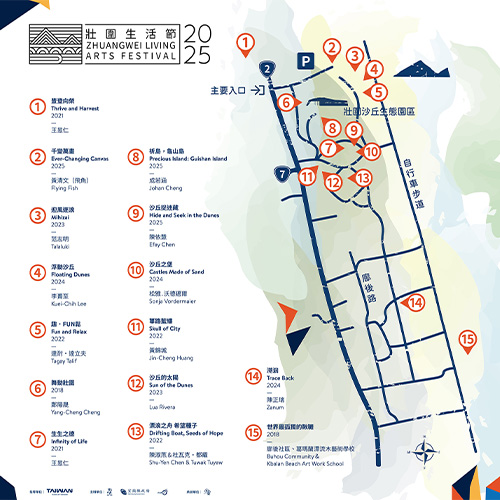
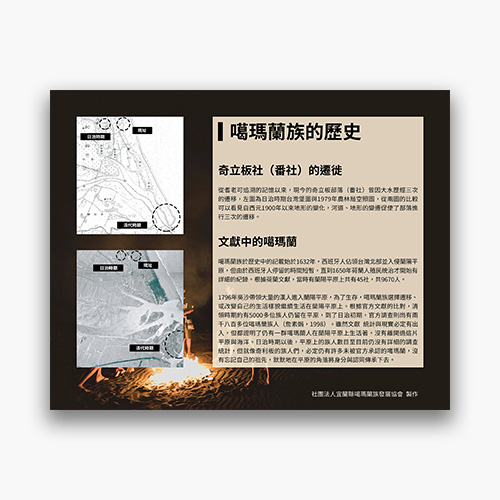
Yilan’s ancient place name, “Kebalan,” comes from the language of the Kavalan people, the indigenous people of the Lanyang Plain. “Kbalan” means “people of the plains” in Kavalan, and was primarily used by the Kavalan people to distinguish them from the Atayal “Pusulan” people who lived in the mountainous areas at the time. The Kavalan community, “Kilipan,” has lived on the inner edge of the coastal sand dunes of the lower Lanyang River (present-day Donggang Village, Zhuangwei Township) since ancient times. Its name, “Kirippoan,” originally means “sand” or “seawall,” a symbol of the unique qualities of this area where the sand meets the sea. Located at the lower Lanyang River and near its mouth, the area boasts flat, sandy soil, good drainage, and abundant sunshine, making agriculture its primary industry. In addition to the cultivation of root crops (peanuts, radishes, watermelons, and yams) along the coast, the Zhuangwei region has become one of Taiwan’s three major rice-producing regions. This has led to the Zhuangwei we see today, with its winding paths crisscrossing the sandy plains and the blue sea, gazing out at the rising sun of Guishan Mountain, a scene of tranquility and abundance. People say, “A grain of sand is a world.” If each grain of sand is a time capsule condensing the memories of the planet’s creation, then it’s no wonder that the Zhuangwei Sand Sea, with its countless grains of sand, is such a fertile land of fish and rice, nurturing a rich and diverse culture for millennia.
 Lumidesign
 Lumidesign